
Timeline and Progress
Near-Term Space Plan
2024
Discovery and Analysis
- Created concept of unlocking campus core
- Engaged community for feedback
- Held design conversations with faculty and staff leadership of impacted academic departments and offices
- Created proposal for Alumni Hall and began design work with the departments of Computer Science, Education, and Philosophy and the Entrepreneurship Program
- Moved Advancement and University Marketing and Communications to University Corporate Center
2025
Design and Plan
- Completed design and began renovations of Alumni Hall
- Continues designs for preparing Manchester-Pruitt to support campus moves
- Developed use plans for spaces vacated by the departments moving to Alumni Hall
- Planned for design of a new student and dining center
- Planned for redesign of Benson University Center for academic space
2026-2027
Move and Build
- Complete renovation of Alumni Hall
- Begin academic move into Alumni Hall in summer 2026
- Implement plans for spaces vacated by Alumni-bound academic departments
Previously Posted Timelines: Near-Term Space Plan timeline June 2024-2026 and pre-May 2024 timeline.
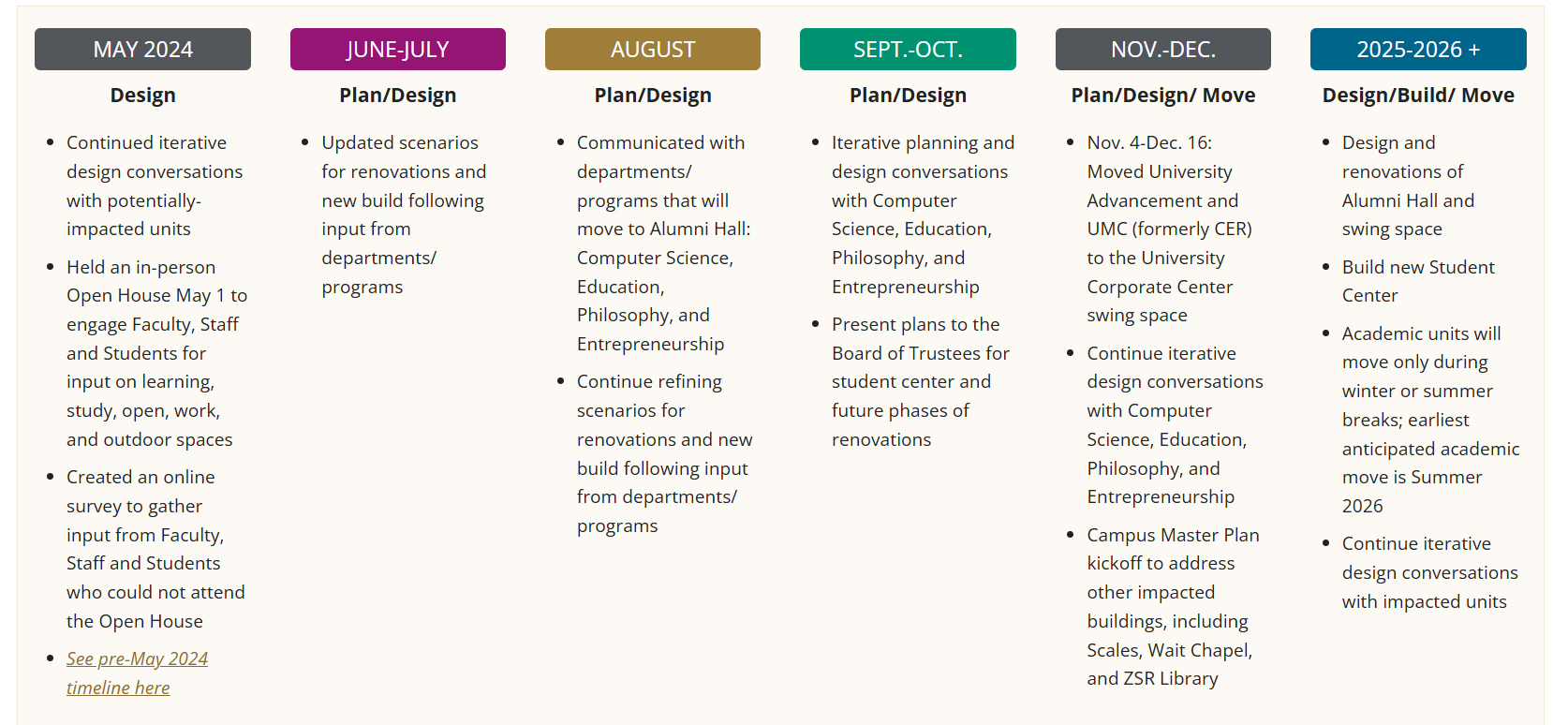
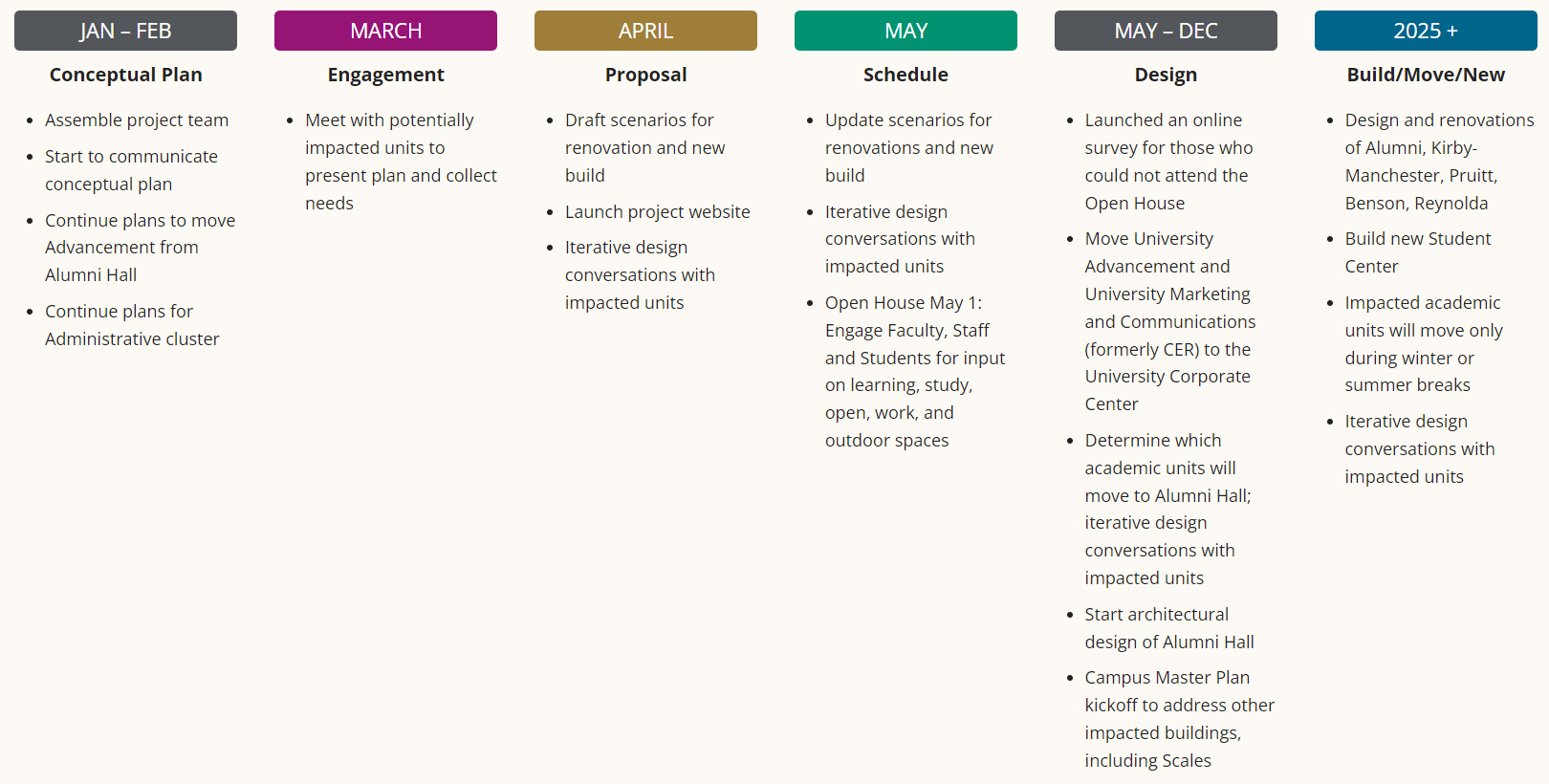
Near-Term Space Plan
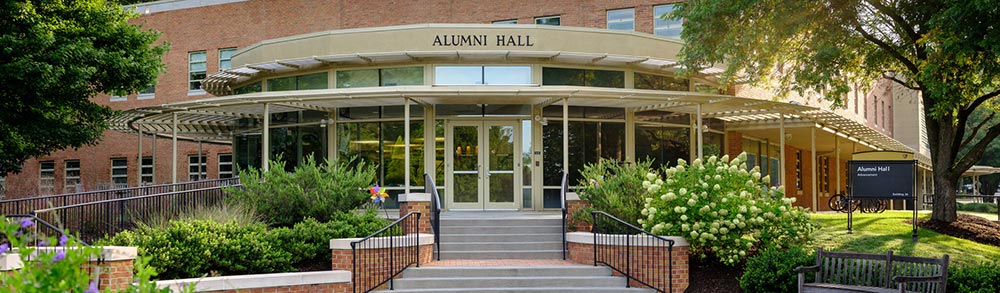
Active Phase
Purpose
- Unlock the campus core: Relocate non-student facing administrative units to create a more student-centric space in the core of campus.
Key Milestones
Alumni Hall is one of the first milestones of the Near-Term Space Plan.
- Underway: Renovation of Alumni Hall into a mix of closed and open collaborative and community spaces, including general-use classrooms, offices, and research, experiential learning, gathering, and study spaces. The departments of Computer Science, Education, Philosophy and the Entrepreneurship Program will call this building their new academic home.
- Upcoming: Construction of a new student and dining center with new main dining hall and spaces for student-facing support services, engagement, and community.
- Upcoming: Transition of Benson University Center into general-use classrooms, offices, and research, experiential learning, gathering, and study spaces.
- Upcoming: Demolition and rebuilding of Collins Residence Hall.
Bicentennial Space Plan
Nov. 2024 – Aug. 2025
Discovery and Analysis
- Formal Kickoff: Presented detailed process and expectations to the Executive Steering Committee and Campus Planning Advisory Group
- Interviews/Listening Sessions: Met with internal & external campus stakeholders to conduct focus group meetings
- Analysis Summary and Principles: Presented summary information and develop planning principles
Sept. 2025 – June 2026
Vision and Refinement
- Concept Plan and Initial Precinct Scenarios: Present conceptual framework and test scenarios for feedback
- Refined Precinct Scenarios: Develop scenarios based on feedback
July 2026 – June 2027 & Beyond
Plan Development
- Draft Plan: Review and present for feedback
- Phasing and Implementation: Discuss and develop priorities, phasing, and cost estimates
- Final Plan: Present final plan to internal constituents and external stakeholders
Beyond
- Continue iterative design conversations with impacted units
- Update scenarios for renovations and/or new build following input from departments/ programs
- Create schedule for all associated projects
Bicentennial Space Plan
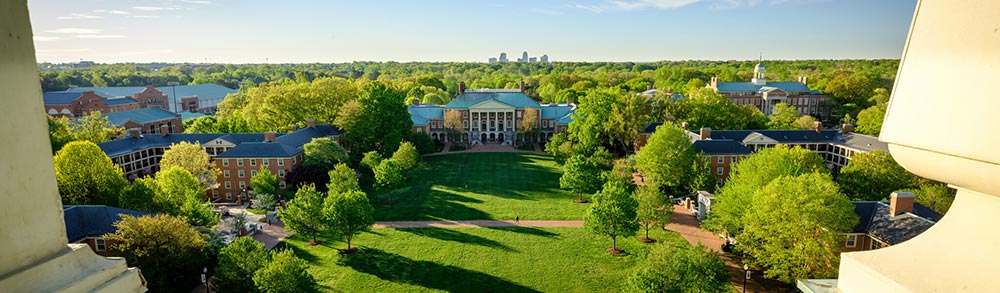
Planning Phase
Purpose
- Create a visionary and actionable framework that guides Wake Forest University in its campus development over the coming decades
- Address key drivers, such as space needs to support excellence in teaching, learning, research, wellbeing, and mentorship, infrastructure upgrades, and campus connectivity, to ensure that the physical campus supports the University’s strategic goals
- Create a plan that enhances campus life, promotes sustainability, and fosters a cohesive real estate strategy that positions the University for long-term success
Key Milestones
- Establish a Project Team, multiple Working Groups, and a large and representative Advisory Group to inform the project.
- Begin holding Listening Sessions for students, faculty, and staff to provide feedback and help discern key issues for the future
Project Status
- Office of the Dean of the College Engagement Meetings with academic leadership
- Baity Street Administrative Planning Meeting
- From Wente’s Desk February 2024 Blog Post
- Provost’s February 2024 Letter to Faculty
- Scales Department Engagement Meeting
- University Space Planning Group Meeting
- How Wake Works presentation on this project
- Focus Groups with academic (or administrative) leadership and Ayers Saint Gross, the Office of the Provost, the Office of the Dean of the College, and Facilities, Real Estate, and Planning
- Targeted conversations with Provost’s Student Leadership Advisory Council (PSLAC) and the Campus Life Advisory Council (CLAC) in Fall 2024
- Project website created
- Held an Open House on May 1 for faculty, staff and students to provide input on learning, study, open, work, and outdoor spaces
- Launched an online survey in late May for those who could not provide input at the May 1 in-person Open House
- Reviewed the feedback from over 250 participants who participated in the May in-person open house and the June online survey and developed design themes and goals for new spaces.
- Re-engaged with department and program leadership for areas that will be moving to Alumni Hall to share what they can expect over the next year through the design process.
- Worked with department/program leadership to notify the departments and programs that will be moving to Alumni Hall (projected date: Summer 2026): Computer Science, Education, Entrepreneurship, and Philosophy.
- Updated academic department/program leadership who will not be moving to Alumni Hall, but who had been part of the space planning discussions, to share that future phases may involve additional relocations or reconfigurations, and we will engage departments as applicable.
- Shared an update with President Wente and project sponsors Provost Gillespie, and EVP/CFO Travisano; this included a high-level discussion of potential renovation of the Benson University Center for academic space, the eventual razing of Tribble Hall, and options for the building of a new student center.
- Facilities and Campus Services held a kick-off design meeting Oct. 3 with faculty leadership in the departments of Philosophy, Education, and Computer Science and the Entrepreneurship program to discuss academic needs.
- Moved University Advancement and University Marketing and Communications (formerly CER) to the University Corporate Center.
- Held How Wake Works: Undergraduate Student Edition (Feb. 2025)
- Held BCCSP Workshop 1, which included listening sessions, working groups, advisory, executive meetings, student outreach
During the 2024-25 academic year, we:
- Continued iterative design conversations with academic units based on the sequence of their move, beginning with the earliest impacted
- Completed initial architectural planning of Alumni Hall
- Began renovations to Alumni Hall
- Created proposed plan for new student and dining center
- Held BCCSP Workshop 2, which will include listening sessions, advisory, executive meetings, and student outreach